
Chick-fil-A CEO & Owner Guide 2026
Many people search for “Chick-fil-A CEO” and “Chick-fil-A owner,” but they often misunderstand the roles. Different sources show different names, which makes it even harder to find a clear answer.
Chick-fil-A is privately owned by a family, which makes its leadership structure unique compared to most fast-food brands.
In this guide, you will discover who owns Chick-fil-A and who the Chick-fil-A CEO is, how these roles differ, and what makes the company unique. By the end, everything will be clear and free of confusion.
See our Chick-fil-A menu
Who is the CEO of Chick-fil-A in 2026?
The current CEO of Chick-fil-A in 2026 is Andrew T. Cathy. He has been serving as CEO since 2021, making him the third generation of the Cathy family to lead the company.
Andrew T. Cathy continues to guide Chick-fil-A’s strategy, focusing on growth, company culture, and customer experience while the company expands its operations globally.
Most global fast-food brands hire outside executives. But Chick-fil-A does things differently. It trusts its own family leadership.
Who Owns Chick-fil-A?
The company is a privately held business, which means it is not publicly traded and has no outside shareholders. Ownership and control remain within the family. The Key members of Chick-fil-A include:
|
Name |
Position |
Notes |
|
Dan T. Cathy |
Chairman |
Former CEO and current chairman of Chick-fil-A |
|
Andrew T. Cathy |
CEO |
Third-generation leader of Chick-fil-A |
|
S. Truett Cathy |
Founder |
Founded Chick-fil-A and built the brand’s core values |
This family ownership structure is one of the main reasons Chick-fil-A operates differently from most fast-food chains.
Who leads the ownership today?
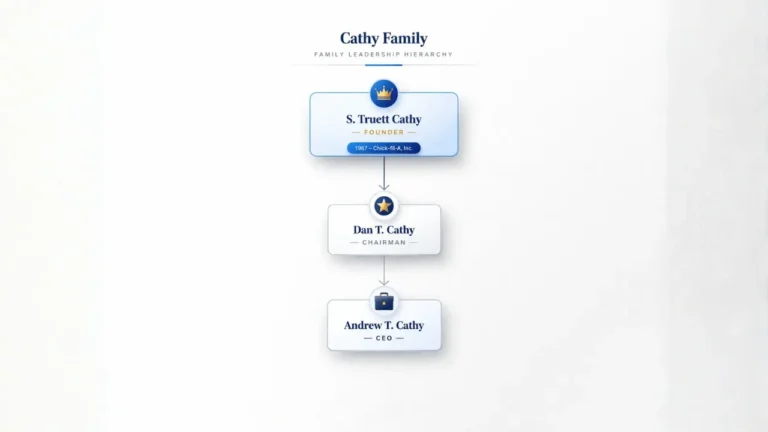
Dan T. Cathy, the son of the founder, plays a key role as Chairman. He previously served as CEO and helped expand the brand nationwide.
Why does this ownership model matter?
This ownership model matters because it gives Chick-fil-A full control and long-term stability. Since the company is owned by the Cathy family.
It is not influenced by outside shareholders or stock market pressure. This allows the leadership to focus on long-term decisions instead of short-term profits. Here’s why it’s important:
|
Factor |
Impact |
|
Family ownership |
Keeps control within the Cathy family |
|
Private company |
No stock market pressure |
|
Long-term focus |
Decisions made for future growth |
|
Strong values |
Consistent company culture |
Chick-fil-A CEO vs Owner vs Chairman Breakdown
This is where most people get confused. They think the Chick-fil-A CEO and the Chick-fil-A owner are the same. But they are completely different roles. Let’s make it simple:
|
Role |
Person |
Main Responsibility |
|
CEO |
Andrew T. Cathy |
Runs daily operations |
|
Owner |
Cathy family |
Owns and controls the company |
|
Chairman |
Dan T. Cathy |
Guides long-term strategy |
How Chick-fil-A Started?
Chick-fil-A began in 1946, when S. Truett Cathy opened a small restaurant called the Dwarf Grill in Georgia.
At that time, it was just a simple local diner. The focus was on serving good food with friendly service. Over time, Truett Cathy noticed a big opportunity in the fast-food market.
He created the idea of a boneless chicken sandwich in the 1960s, which became the foundation of Chick-fil-A’s success. This simple idea helped the business stand out at a time when most fast-food restaurants focused on burgers.
In 1967, the first official Chick-fil-A restaurant opened in a shopping mall. From there, the brand began to grow steadily across the United States.
Cathy Family Leadership Timeline
Chick-fil-A is not just a business. It is a multi-generational family legacy. Here’s how leadership has passed over time:
Founder Era
Expansion Era
Modern Era
What Makes Chick-fil-A Unique?
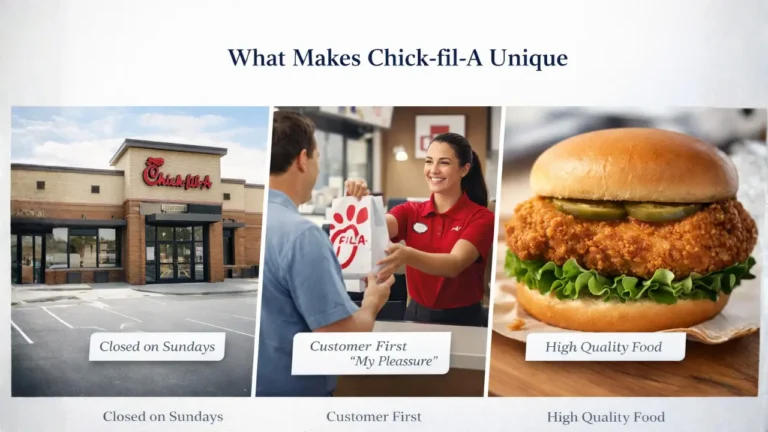
Chick-fil-A stands out from other fast-food brands because of its ownership, business model, and strong values.
Family-Owned Structure
The company is owned by the Cathy family.
Closed on Sundays
Chick-fil-A restaurants are closed every Sunday.
Unique Business Model
This helps maintain consistent quality and service across locations.
Read Also: Chick-fil-A Allergen Menu
Chick-fil-A Business Model
Chick-fil-A uses a unique business model that is different from most fast-food chains. Instead of a traditional franchise system, it follows a selective operator model with strong corporate control.
Operator-Based System (Not Traditional Franchising)
The company owns the business, while operators manage day-to-day operations.
Low Startup Cost
This makes it easier for selected operators to start, but selection is very competitive.
Revenue Sharing Model
|
Aspect |
How It Works |
|
Operator |
Manages the restaurant |
|
Company |
Owns the location |
|
Profit |
Shared between the operator and the company |
Operators earn a share of profits instead of full ownership.
Strong Corporate Control
The company keeps strict control over:
This ensures every location offers the same quality and experience.
High Selectivity
Visit Also: Chick-fil-A Franchise Cost, Requirements & Profit
Leadership Philosophy & Company Values
Chick-fil-A is not just about food. It is built on strong values. These values come directly from its founder, S. Truett Cathy, and are still followed today.
Core principles of the company:
Customer First
Employee Care
Closed on Sundays
This decision is rare in fast food and shows their long-term thinking.
Long-Term Growth
Chick-fil-A CEO & Ownership Comparison
|
TimePeriod |
CEO |
Key Ownership |
Notes |
|
1946 – 2013 |
S. Truett Cathy |
Founder & family-owned |
Founded Chick-fil-A and built it into a fast-food brand. Ownership stayed fully within the Cathy family. |
|
2013 – 2021 |
Dan T. Cathy |
Cathy’s family (Dan & siblings) |
Dan Cathy (son of the founder) became CEO. Under his leadership, revenue grew significantly. |
|
2021 – Present |
Andrew T. Cathy |
Cathy’s family (3rd generation) |
Andrew Cathy (grandson of the founder) became CEO, continuing the family legacy. |
FAQs
Conclusion
Understanding the difference between the Chick-fil-A CEO and the Chick-fil-A owner makes everything much clearer. The CEO, Andrew T. Cathy, runs the company daily, while the Cathy family keeps full ownership and control.
This unique structure is one of the biggest reasons behind Chick-fil-A’s success. It allows the company to stay consistent, focus on values and grow without outside pressure.
Now you know exactly who runs and owns Chick-fil-A making your next visit a little more interesting.


